Jain Dharma (Jainism)
Jainism, traditionally known as Jain Dharma, is an ancient Indian religion and one of the oldest living religious traditions in the world. Followers of Jainism are called “Jains,” a term derived from the Sanskrit word jina (victor), referring to those who have conquered the cycle of birth and death by destroying karma through an ethical and spiritual life.
Jainism teaches a path to spiritual purity and enlightenment through disciplined nonviolence (ahimsa) toward all living beings. At its core, Jainism emphasizes concern for the welfare of every soul in the universe and the health of the cosmos itself. It is a religion of harmlessness, renunciation, and profound respect for life.
Historical Origins
Jainism traces its origins to Bhagwan Rishabhanatha (also called Adinatha), the first Tirthankara (omniscient teacher), who lived in the pre-historical era. Rishabhanatha is mentioned in several Hindu Puranas, including the Vishnu, Bhagavata, Markandeya, and Skanda Puranas.
He is revered as the founder of human civilization and the first Jina.
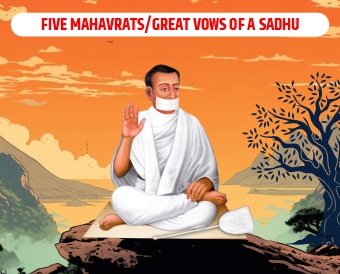
The 24th and last Tirthankara, Bhagwan Mahavira, gave shape to Jainism in its present form over 2,500 years ago. According to traditional Jain accounts, Mahavira was born in 599 BCE in the royal family of Vaishali (in present-day Bihar). He renounced worldly life at the age of 30 and became an ascetic, practicing the five great vows: non-violence, truth, non-stealing, celibacy, and non-possessiveness.
Core Philosophy
Soul and Karma: Every living being is a soul that has existed since infinite time, passing through cycles of birth and death. The soul is bound by karma—a subtle form of matter—through its own actions driven by passion, attachment, and aversion. Jainism does not accept creationism; the soul itself is the master of its own fate, responsible for all its actions—good or bad.
Liberation (Moksha): The soul, in worldly existence, undergoes suffering caused by karma. However, it also possesses the potential to attain liberation (moksha). By eliminating passions (such as anger, pride, deceit, and greed), and by following the three jewels—right knowledge, right faith, and right conduct—one can achieve omniscience and, ultimately, emancipation from the cycle of rebirth.